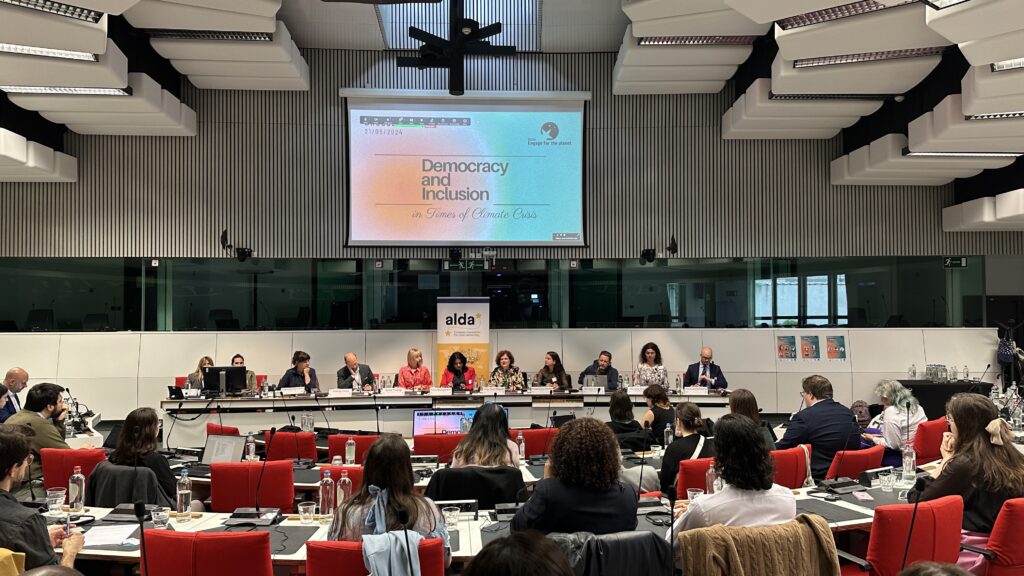
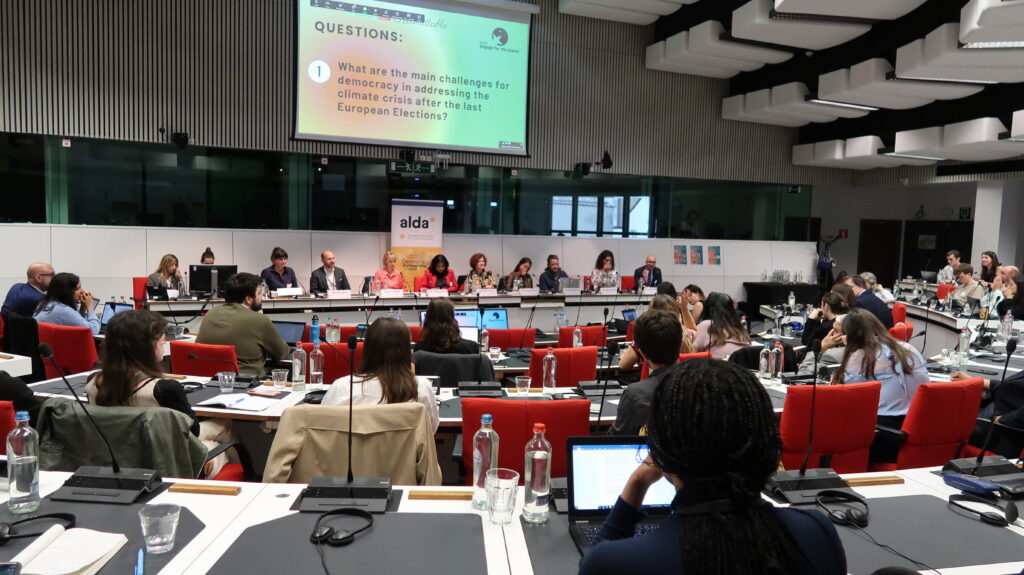
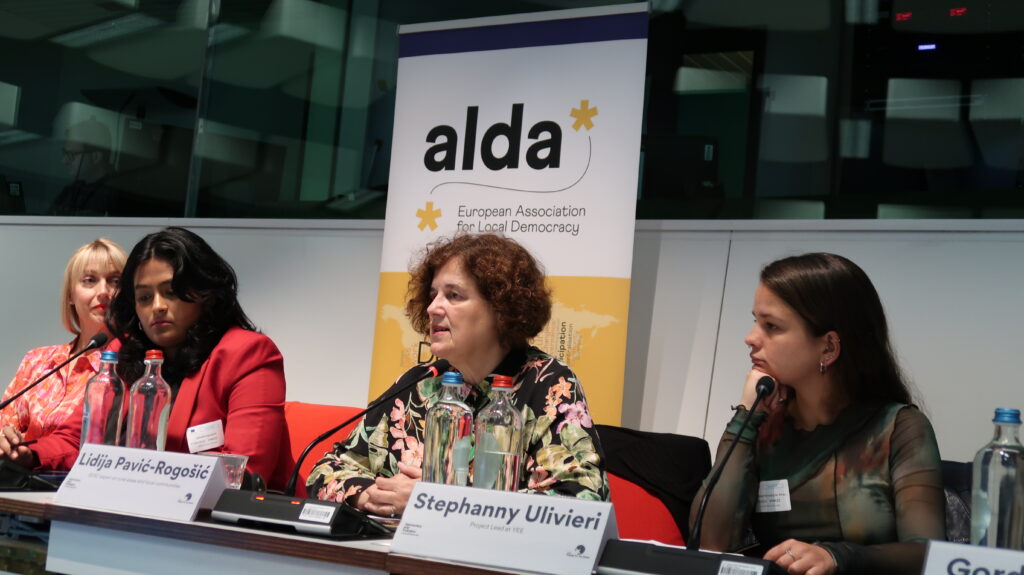
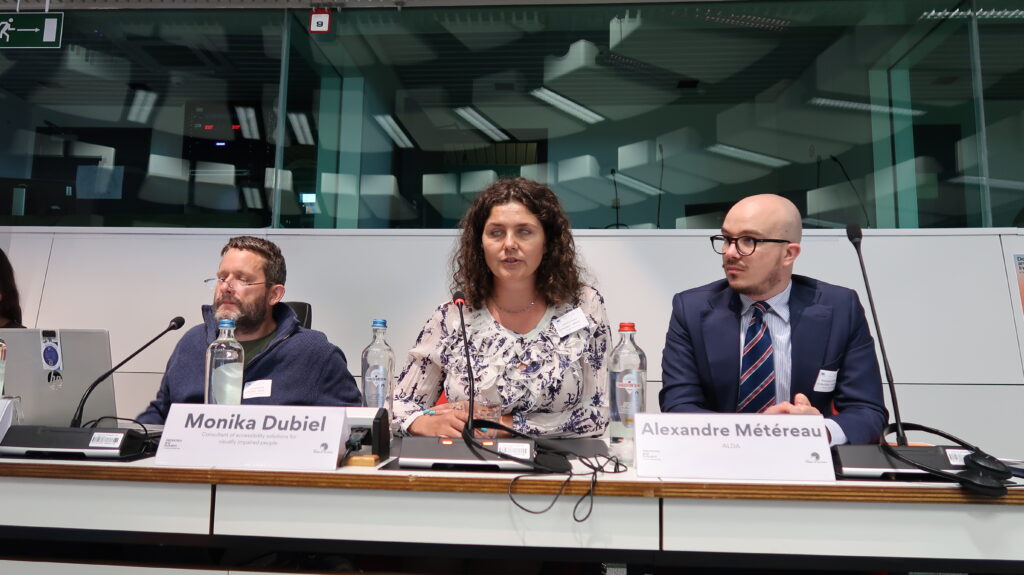
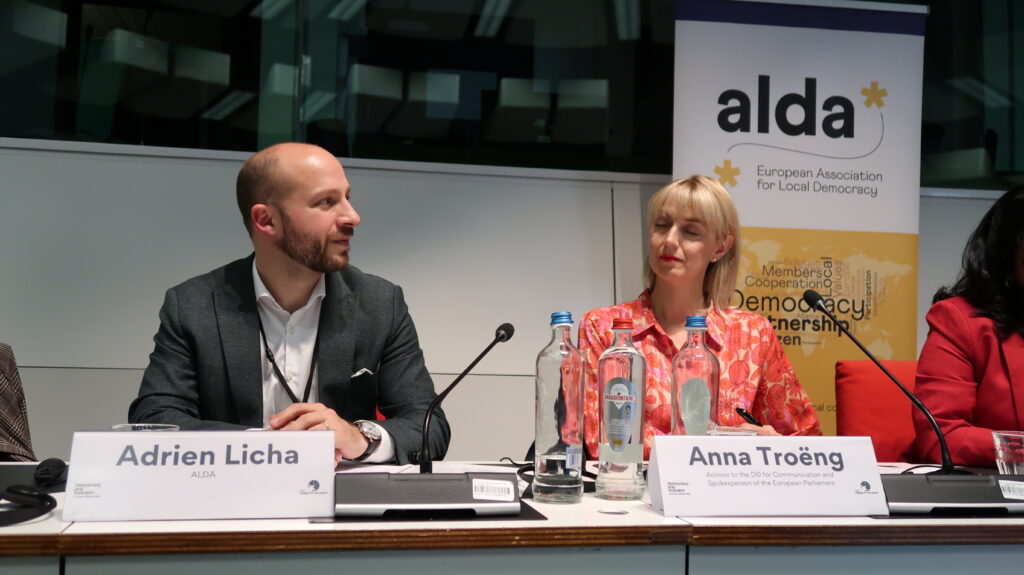
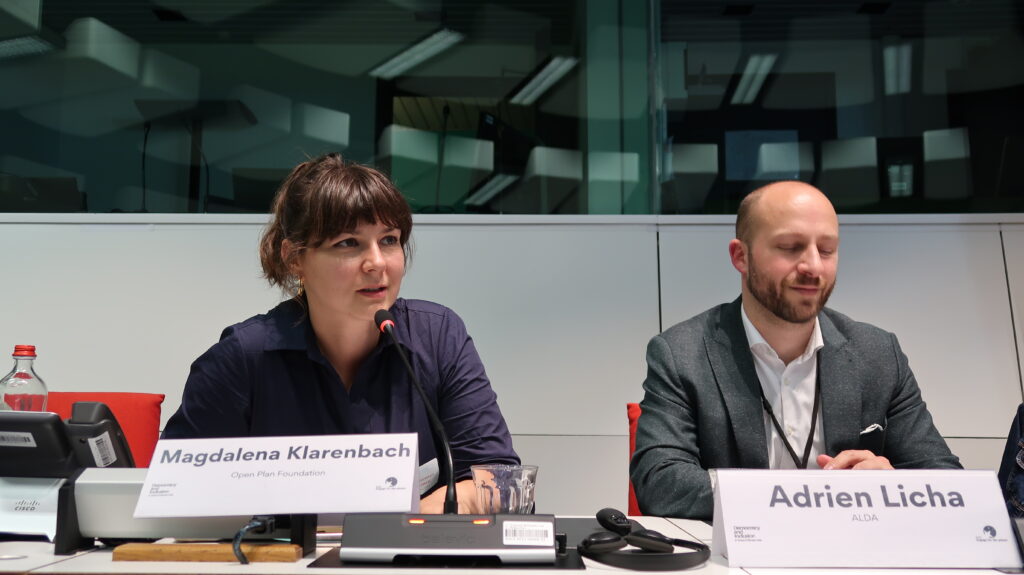
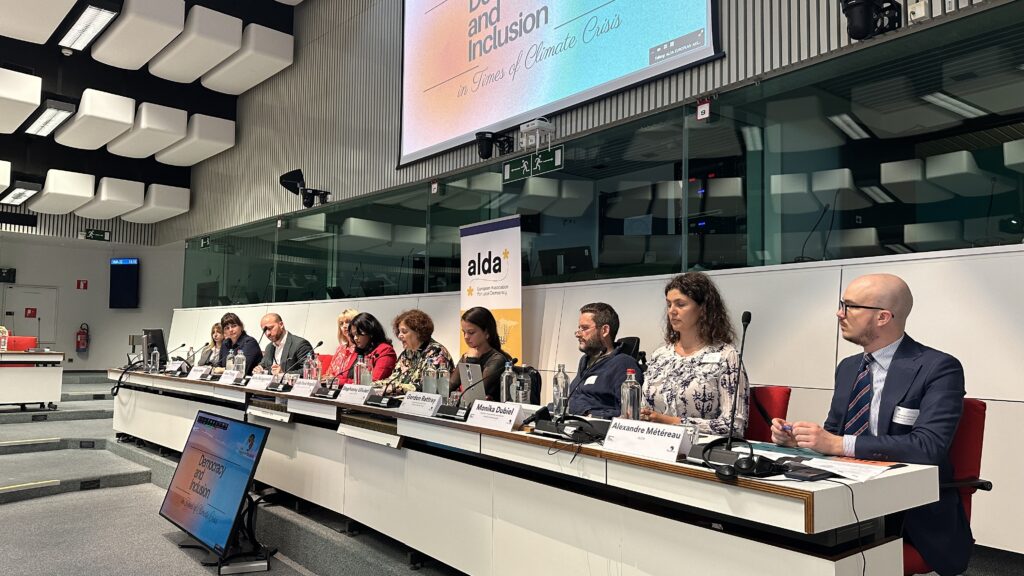
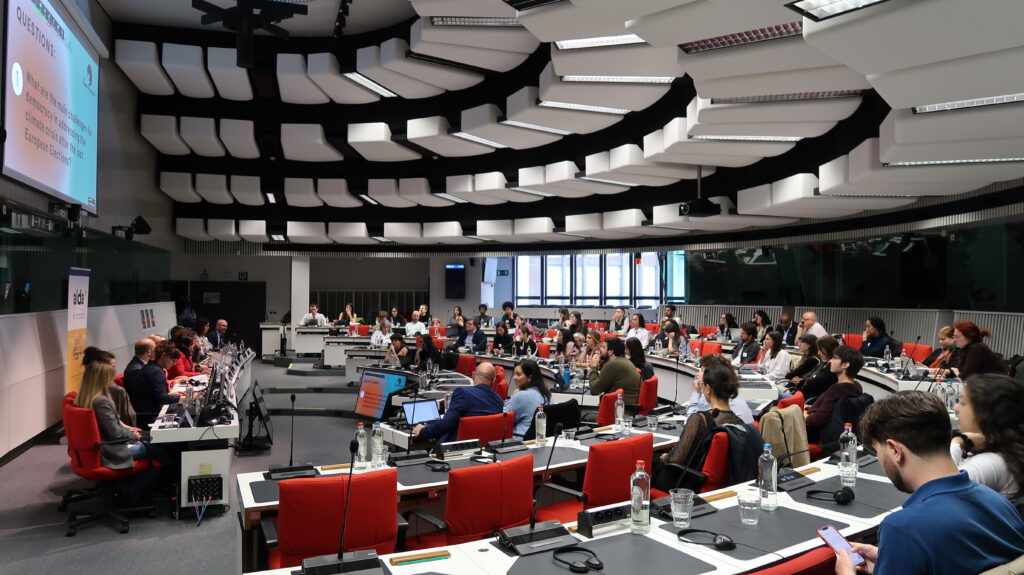
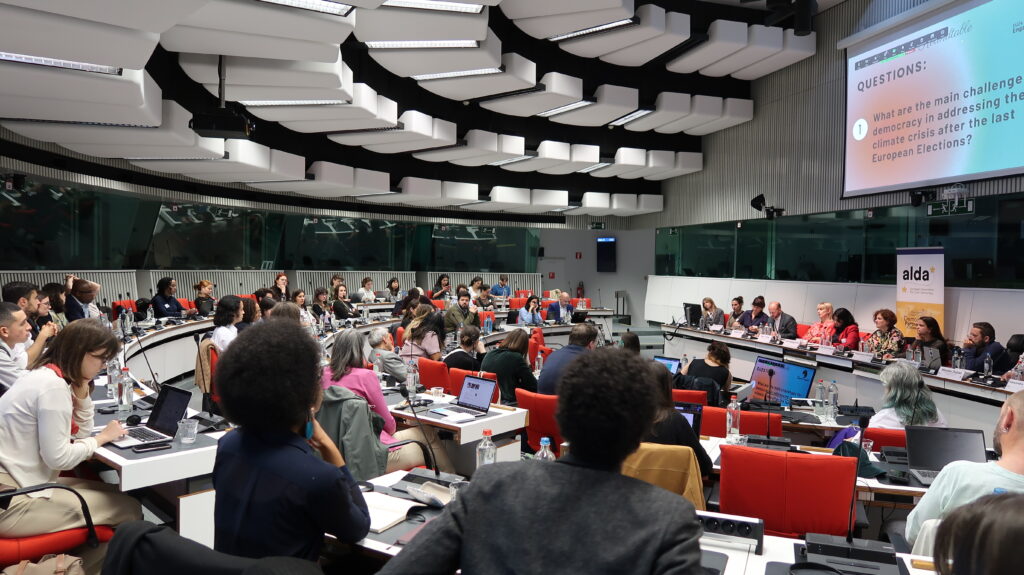
The roundtable discussion offered an engaging exchange for Exploring challenges and opportunities for Inclusive Democracy in Addressing the Climate Crisis from Various Perspectives. Moderated by Magdalena Klarenbach (Fundacja Otwarty Plan) and Alexandre Meterau (ALDA), the session brought together a diverse panel of representatives including:
- Anna Troëng, Advisor to the Director General for Communication and Spokesperson of the European Parliament
- Lidija Pavić-Rogošić, an EESC expert on rural areas and local communities
- Saha Balaganesh, Network Engagement Lead at The Democratic Society
- Stephanny Uliviery, Project Lead at YEE
- Gordon Rattray, Programme Coordinator at the European Disability Forum
- Monika Dubiel, a consultant on accessibility solutions for visually impaired people.
The discussion focused on several critical questions designed to capture the perspectives of the groups represented by the panellists. The panellists addressed the key challenges for democracy and inclusion in tackling the climate crisis, particularly following the recent European elections. They explored how democratic institutions can better integrate diverse social and cultural perspectives into decision-making processes related to climate action. In addition, the panelists shared best practices for involving local communities and marginalised groups in environmental decision-making, underlining the need for equitable and effective climate policies.
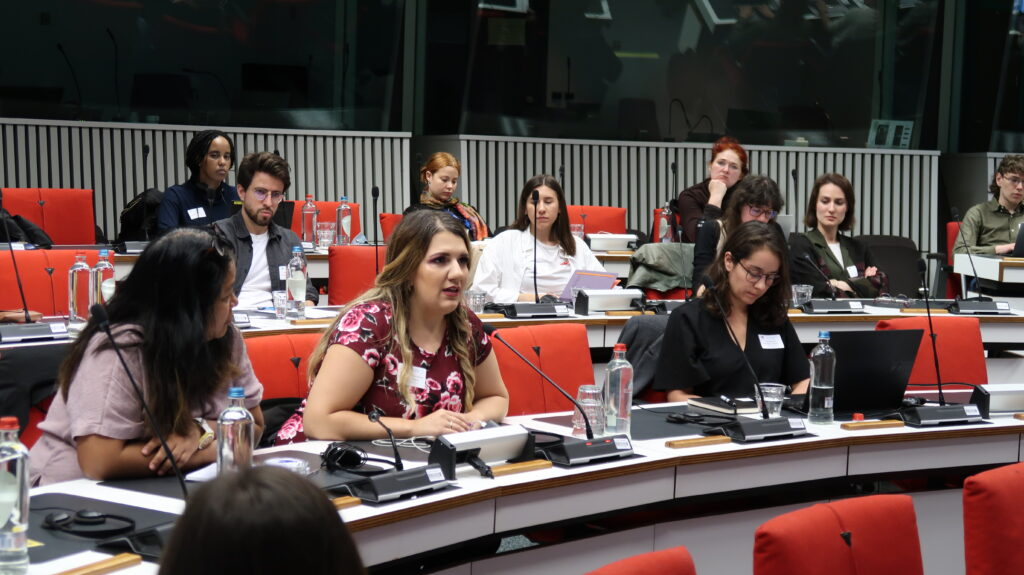
Audience engagement was a key component of the roundtable, with participants encouraged to interact directly with the panelists. Attendees, both in person and streamed online, posed questions and shared insights, enriching the dialogue and highlighting the collective effort required to address the climate crisis inclusively from their perspective.
Following the roundtable, the presentation session, moderated by Adrien Licha (ALDA), provided a comprehensive overview of the EU24 – Engage for the Planet project’s activities, achievements, and challenges. This session aimed to present the tools and good practices for inclusive democracy, with a reflection on the EU24 Engage for the Planet project.
Francesca Olivier (Almost There) presented on inclusive public events, discussing how blended format debates on food production, energy, climate justice, and mobility have fostered inclusive participation during the activities of the project in the participating countries: Poland, Strasbourg, Germany, Sweden and the Netherlands. This included recommendations on inclusive methodologies used during these events.
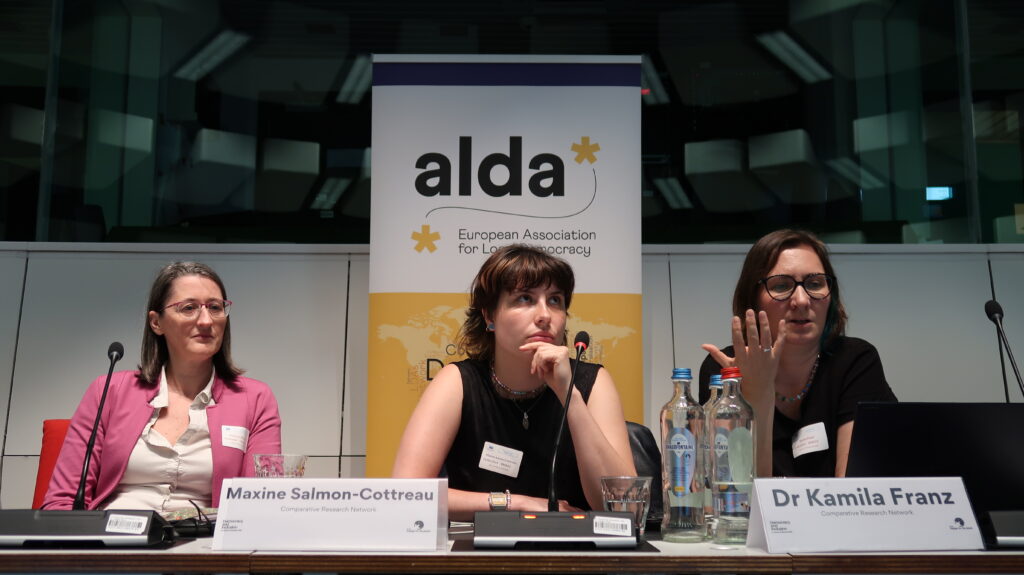
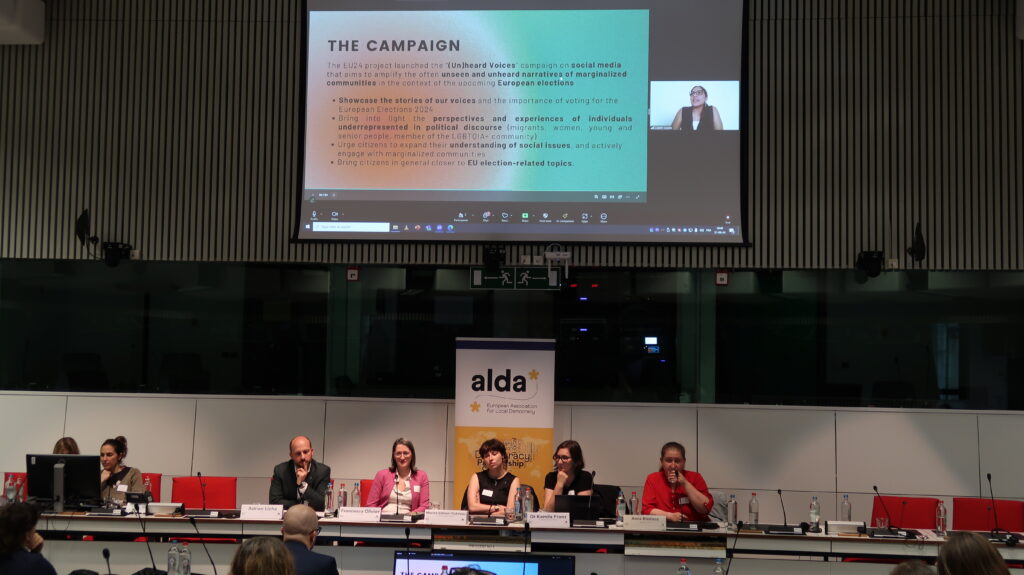
Dr Kamila Franz and Maxine Salmon-Cottreau (Comparative Research Network) showcased inclusive online tools, such as an e-democracy platform designed to enhance civic engagement and created as part of the activities of the project. The platform was highlighted as a resource for organizing and facilitating various types of events, as an Informative hub, and as a place for collaboration. It is qualified as accessible, easy, open, safe, and updated.
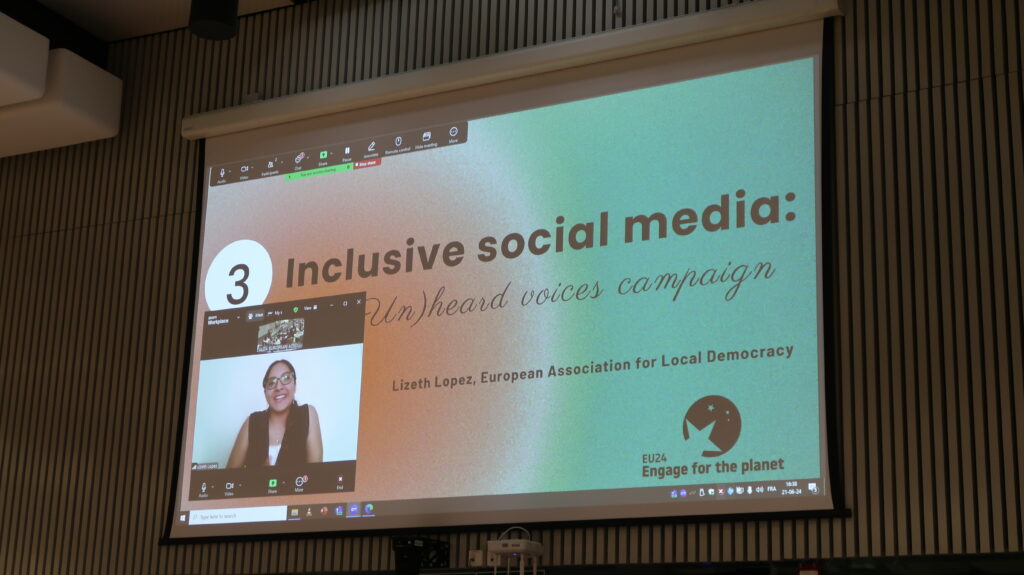
The last part of the session highlighted the importance of inclusive social media. Lizeth Lopez (ALDA) presented the (Un)heard Voices campaign. This initiative aimed to amplify the often unheard and unseen voices of underrepresented groups in the political and climate discourse. The presentation emphasized the importance of disseminating the perspectives of underrepresented groups using channels such as social media and understanding the possible challenges as well as positive outcomes it might bring. To conclude the session, Anna Bieniasz (EGEA Alumni), reflect on inclusiveness and diversity, emphasizing the project’s impact and future directions.
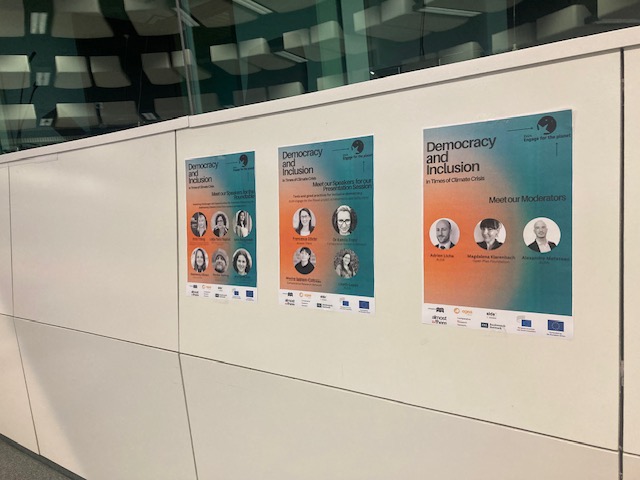
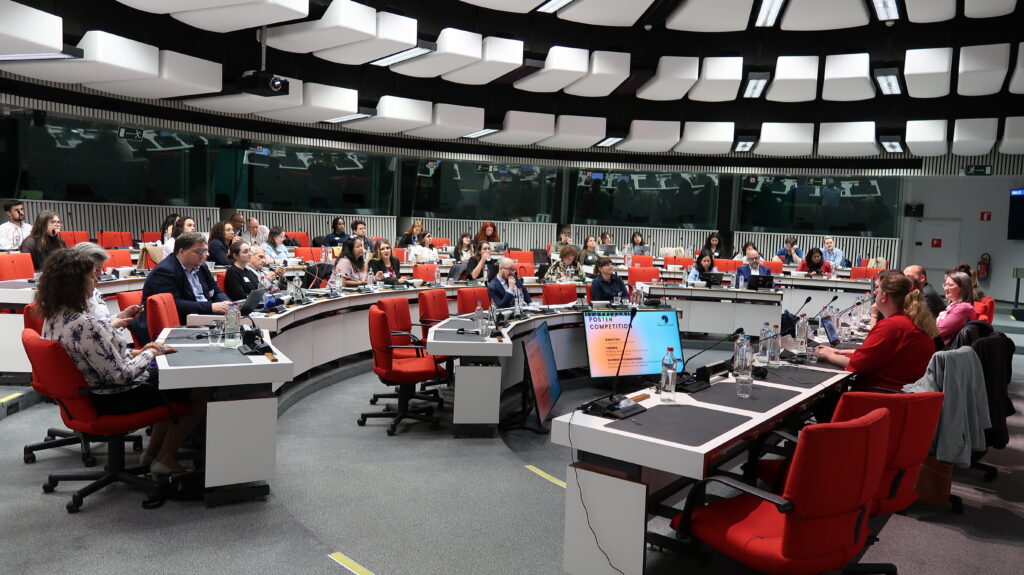
The event concluded with an award ceremony for the international poster competition which was carried out during the project. Representatives of the Comparative Research Network introduced the competition concept, themes involved and submissions reached. A presentation of the winners’ posters from France, Germany, the Netherlands, and Sweden was announced.
The creative and impactful posters of all the submissions were displayed in a digital exhibition, providing a visual representation of the project’s themes and outcomes. Attendees had the opportunity to view these posters and videos from the (Un)heard Voices campaign while enjoying refreshments, rounding off a successful event that underscored the critical intersection of democracy, inclusivity, and climate action.
The “Democracy and Inclusivity in Times of Climate Crisis” event provided invaluable contributions thanks to the participation of the attendees.We extend our gratitude to the panellists, moderators, and speakers who provided profound insights and fostered rich discussions. Special thanks to the European Economic and Social Committee for hosting this impactful gathering, and to the attendees, both in-person and online, whose active engagement made the event a resounding success.
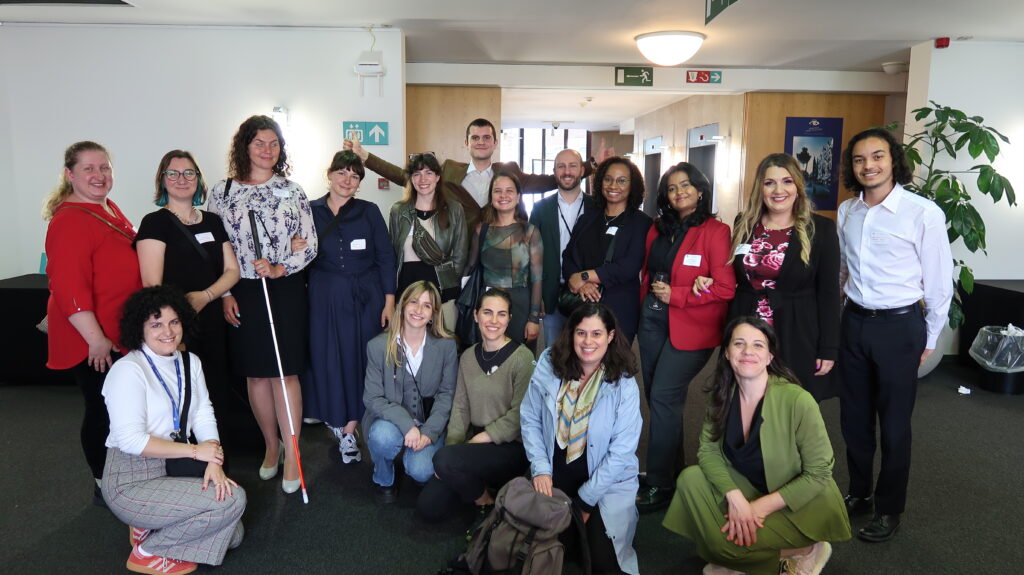

Within the scope of the EU24 Engage for the Planet Project, the international event “CLIMATE DEBATE: Empowering underrepresented people’s voices and boosting their commitment to green mobility” took place in Strasbourg on September 28, 2023.
76 participants from more than 16 countries attended the event, which was organized by ALDA in partnership with the EU24 project partners Comparative Research Network, EAGEA Alumni, Open Plan Foundation and Changemaker. The event offered a great opportunity for debate on the obstacles to green mobility in Europe and potential solutions.
The conference aimed to empower and amplify underrepresented voices, making them join the discussion about green mobility and its impact on our planet. The discourse was significantly shaped by the encouragement given to youth and citizens from all backgrounds to express and share their perspectives. Participants engaged in high-profile discussions on the subject of green mobility, analyzing problems, possible solutions and suggestions for a greener and healthier future.
During the plenary session, Emma Pagliarusco from the Youth and Environment Europe, and Chloé Mothu and Victor Douilly from the Climate Agency of Strasbourg intervened bringing their valuable contribution to the success of the event. A representative of the Région Grand Est opened the conference with institutional greetings, and the EU24 project leader, Comparative Research Network, provided a detailed presentation of the project.
Guided by facilitators from the project partners, the participants from different countries and different backgrounds discussed in small groups on the future of green mobility in Europe, brainstormed and co-design a policy recommendation on the topic. During the work-in-groups sessions, facilitators used the method called “Articulating a Vision”, a debate technique aimed to identify the issue, visualize the future and try to find a solution together as a group on how to reach that future without illusions. Many interesting ideas on green mobility emerged from the group debates, and the results were presented to the plenary as a conclusion of the conference.
The group discussions revealed a particular focus of the participants on the issue of public transport, with many aspects being considered: accessibility of transport in economic terms (discounts on tickets and financial support for the purchase of tickets by institutions); awareness-raising and training on green mobility issues; incentives for innovation and technology for more advanced and modern forms of green mobility; incentives for the use of bicycles; and regulation of car production and circulation.
Overall, whether the participants came from different countries and had different backgrounds, all groups showed common items and the various discussions led to similar conclusions, revealing that what emerged from the groups represents the main challenges that most of the people perceive as urgent.
Moreover, as part of the poster competition launched in the framework of a project to link creativity with the raise of awareness of challenges and problems about the climate crisis. The poster competition works as a way to increase understanding of the difficulties and opportunities brought on by the climate crisis. Consequently it enables participants to connect local issues of sustainability, climate justice and climate change to broader discussions. Three posters in competition were exposed during the event, coming from Italy, France and Germany. The attendees in the conference had the opportunity to vote for the posters during the event, and the winner of the poster competition on green mobility was announced. The three posters were fully appreciated, and the italian Saba Armeni, won with her interesting work on green mobility. She will be invited to attend the project’s Final Conference in Brussels, in 2024.
The Climate Debate in Strasbourg has been a significant occasion to underline the importance of giving voice to citizens, especially the underrepresented and marginalized ones, with a wide and diverse audience. Together we aim to decrease the democratic participation gap of young citizens, citizens of diverse backgrounds, in a gender balanced way by showing them their voices matter.
Follow the EU24 Engage for the Planet Instagram page to stay updated on the latest developments and opportunities!
#climatechange #sustainability #youthopinions #EUdebate


Event Report
Local Issues and EU Policy Country Report 1:France
]]>Participatory exercise – Articulating a vision
The debate method used for the Mobility Group is called Facilitated Participatory Exercise. The purpose of this debating method is to find out the problem, visualize the future and try to work out together how to reach that future without illusions.
Evaluation of the method
Methodology test brought together participants from diverse backgrounds, including people living in capital cities and remote villages. Despite their different realities, they identified common problems such as over-centralization, unreliable public transport and affordability issues. Importantly, there was a consensus among the participants, with no disagreements observed throughout the process. However, the method itself was found to be somewhat static and it is suggested that a more dynamic approach could be beneficial. One recommendation is to better specify the future time frame (e.g., by dividing it into shorter (e.g. 5 years) and longer (e.g. 25 years) intervals), allowing for more nuanced discussions and the development of two or three well-articulated recommendations. In addition, incorporating group dynamics and using a facilitator in a conference setting could further enhance the effectiveness of this method. Overall, the testing of the Articulate a Vision debate method provided valuable insights into pressing mobility issues and allowed participants to collectively envision a more sustainable and accessible future. By considering feedback and incorporating improvements, this method can be further refined and used in different settings to encourage engaging and productive discussions among participants.
Classic Mindfulness Lead Debate
It is a set of rules that foundation the Mindfulness concept that might help to organise space and the participants’ attitudes in a certain way. It includes verbalising intention before starting the session indicating to everyone the intention for the whole debate (kind & curious interest (towards others but also towards yourself), to be open-minded, non-judgmental, open awareness), and meditation.
Evaluation of the method
The technique takes away the competition from the debate and creates space for some deeper thinking. The reminder about mindful listening was helpful, as we very often have a tendency to speak our minds instead of being present with another person talking. Saying our names before voicing our thoughts made participants feel more engaged in the conversation. Some participants felt that the topic of food production was quite difficult and technical, and they felt that they could not contribute much to the subject. They suggested that maybe having some experts to talk about it would be quite helpful. This method was found to be engaging and allows deeper reflection. The participants valued the fact that they had the chance to first self-reflect and only later move on to group discussions. The meditation at the beginning of the session helped people to ground themselves. It also helped to ignore the noise and distractions around and focus more on the debate. It seems that this method would work fine also online.
Fishbowl
The main idea of this method is to divide a group in two: one group in the bowl, second group outside of the bowl. The participants in the bowl had an open conversation about the long term vision on energy. Participants switched places during the conversation (facilitated by the moderator) so they were in and out the fishbowl. While outside the fishbowl participants made notes on their observations during the conversation. After the first round in-depth reflection on the conservation among the observers and the participants, there was no clear outcome but many suggestions were raised related to long -term energy vision, the importance of a global approach, equal access to energy, sharing knowledge and alternative energy resources.
Evaluation of the method:
The method was rated as very effective. However, it is necessary to have strong facilitation which might also mean removing too ‘talkative’ participants from the fishbowl and inviting those being on stand-by. Participants who were on ‘stand-by’ enjoyed listening to the fishbowl discussions also because some of them had a chance to revisit their own opinions. This method seems more fitted for off-line interactions rather than online or hybrid ones.
1-2-4-All
It is a technique that facilitates conversation in small groups and then brings the small groups together to integrate their ideas on the topic. First, participants silently reflect on a question or issue (1). Then they share their reflections in pairs (2). After 5-10 minutes, two pairs join up (4) and continue with the conversation as a group. Finally, everyone gathers together to sum up their main conclusions. Our modification: Due to the small size of the group we modified the group sizes. After the individual reflection, we discussed in groups of 3 and afterward all together.
Evaluation of the method
This method was found to be engaging and allows deeper reflection. The participants valued the fact that they had the chance to first self-reflect and only later move on to group discussions. It seems that this method would work fine also online. Participants also agrees that the method is inclusive (everyone has a chance to express their opinion), engaging (working in pairs and small groups means everyone takes part), safe (participants reflect first alone, they have time to clearly formulate their
thoughts, the aim is to reach a solution and come up with it together), tolerant, representative, has easy language, leads to conclusions (several rounds of discussion each time in a bigger group helps to narrow down the ideas) and it gives a possibility to collect questions as well anonymously (the initial part could be anonymous, written down and then discussed in groups).